Skip to content
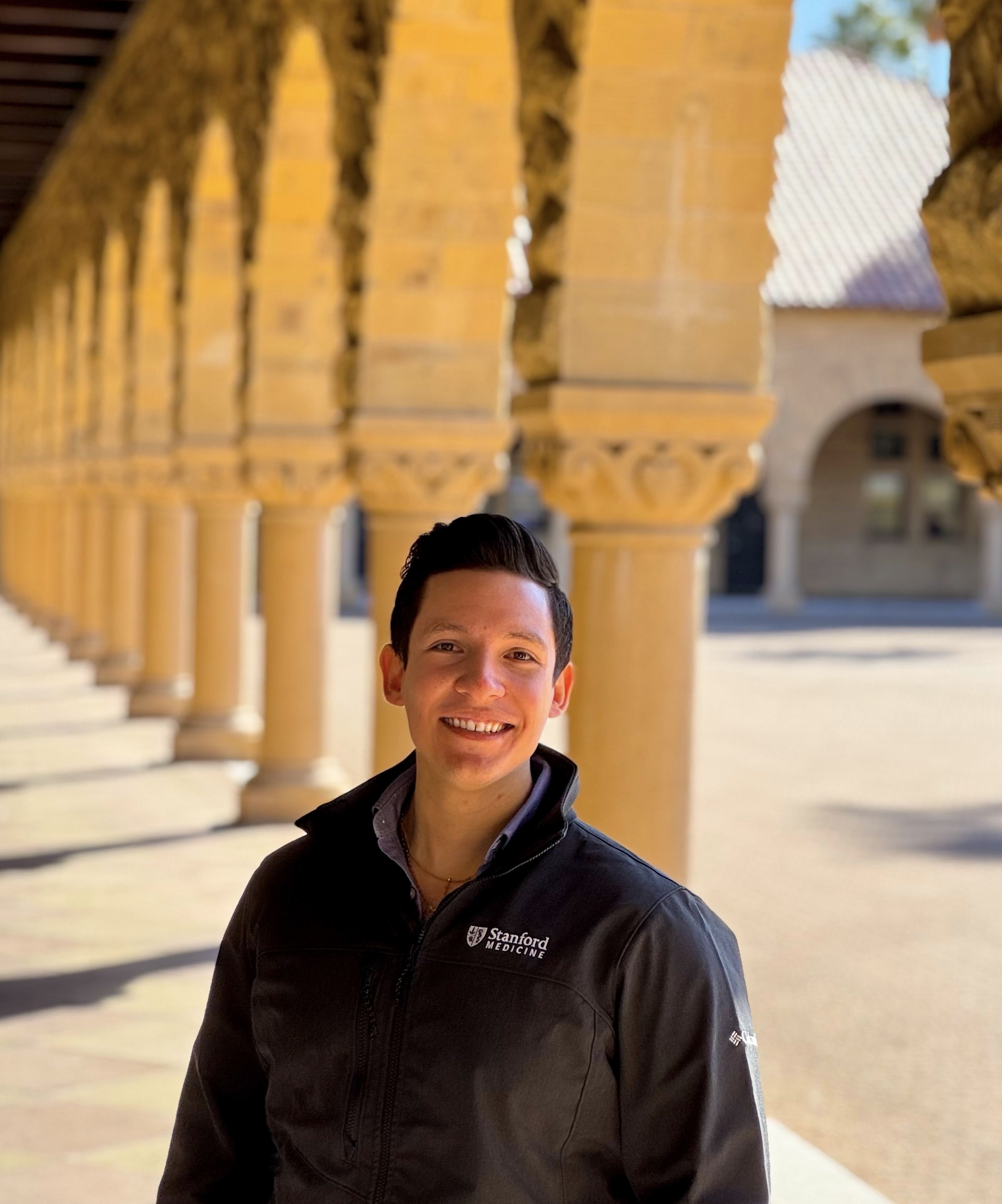
I’m a data scientist and software developer at Stanford’s Department of Health Policy, where I build Bayesian calibration models and decision-analytic tools for cancer screening research. My work spans gastric and colorectal cancer — modeling H. pylori eradication strategies, projecting the long-term impact of colorectal screening guidelines, and translating clinical evidence into policy-relevant models. I hold an MSc in Data Science for Public Policy from the Hertie School and am part of the colorectal and gastric cancer groups within CISNET, the NCI’s Cancer Intervention and Surveillance Modeling Network.
Before Stanford, I held research positions across Mexico and Germany. At CIDE’s Drug Policy Program, I built datasets on organized crime — mapping 148 criminal groups and geocoding thousands of violent incidents — work that reached national and international media. At CISIDAT, I built Bayesian and survival models for H. pylori, COVID-19 mortality, and homicide trends in Mexico. At the Hertie School Data Science Lab, I built scrapers and structured datasets for NLP and LLM research.
I build open-source R packages for health economic research and am developing AI orchestration systems — multi-agent pipelines connecting language models to health modeling workflows.
Skills
Data, visualization & GIS
Teaching Assistant Experience
Cost-Effectiveness Analysis and Decision Modeling in R
Universidad de Chile · School of Public Health
Santiago, Chile · 11/2025 – 12/2025
Teaching assistant for the Stanford CEA Chile 2025 intensive course. Led a session on setting up R for cost-effectiveness analysis — environment configuration, package installation, introductory CEA workflows.
Quantitative Methods I
Center for Research and Teaching in Economics (CIDE)
Aguascalientes, Mexico · 01/2021 – 07/2021
Weekly two-hour class for undergraduate students covering the theory of statistical methods and practical applications in R.
Methods for Public Policy Evaluation
Catholic University of Uruguay
Remote · 08/2019 – 07/2020
Winter School in Methods 2020. Covered Difference-in-Differences, Matching, Instrumental Variables, and related techniques.
Awards
2022
Best Junior Investigator Poster Award
Cancer Intervention and Surveillance Modeling Network (CISNET)
For research on the Helicobacter pylori (H. pylori) Infection Generator.
Talks
2023
Hertie Coding Club: A Student Initiative to Promote Coding Skills
CIVICA Student Association Forum
Warsaw, Poland
Hackathons
2023
DataFest Germany
Ludwig-Maximilians-Universität (LMU)
2023
ALCF Incite Hackathon
ALCF, NVIDIA, OpenACC
Certifications
Cost-effectiveness and Decision Modeling using R
Decision Analysis in R for Technologies in Health (DARTH)
2023
Fundamentals of Accelerated Computing with CUDA Python
NVIDIA Deep Learning Institute
2023
Data Science Summer School
Hertie School
2022
Drug Policy, Health and Human Rights
Center for Research and Teaching in Economics (CIDE)
2021
Introduction to R and Spatial Analysis with GIS
Winter School in Methods · Catholic University of Uruguay
2020
Memberships
DARTH
DARTH
Decision Analysis in R for Technologies in Health
Member · 2024 – Present
SMDM
SMDM
Society for Medical Decision Making
Member · 2023 – Present
DS²
Stanford
Data Science × Decision Science (DS)² Research Hub
Member · 2023 – Present
SIL
Stanford
Stanford Impact Labs
Member · 2025 – Present
GC
CISNET
Gastric Cancer Site
Member · 2021 – Present
CRC
CISNET
Colorectal Cancer Site
Member · 2023 – Present











 2025
2025