Ve AMLO sólo 3 cárteles… pero existen 20 más
Reforma — Nacional
Ve AMLO sólo 3 cárteles… pero existen 20 más
Reforma — Nacional Mexico City · July 2, 2021 National-print piece contrasting the administration’s 3-cartel framing against the CIDE mapping of 20+ active criminal organizations. Photo: Grupo Reforma
The Story
While President López Obrador stated publicly that only three cartels operate in Mexico and that no new criminal groups had emerged during his administration, Baranda’s piece put the CIDE Drug Policy Program data on the front page of Reforma’s national section. The numbers told a different story: specialists documented at least 20 additional organizations — including newly formed structures like Cárteles Unidos — operating across the country. The same period saw 40 massacres in the first half of 2021 alone, with 10 major killings in June.
The article ran alongside figures from the CIDE dataset placing the total count of active criminal groups at 23, far above the president’s stated three.
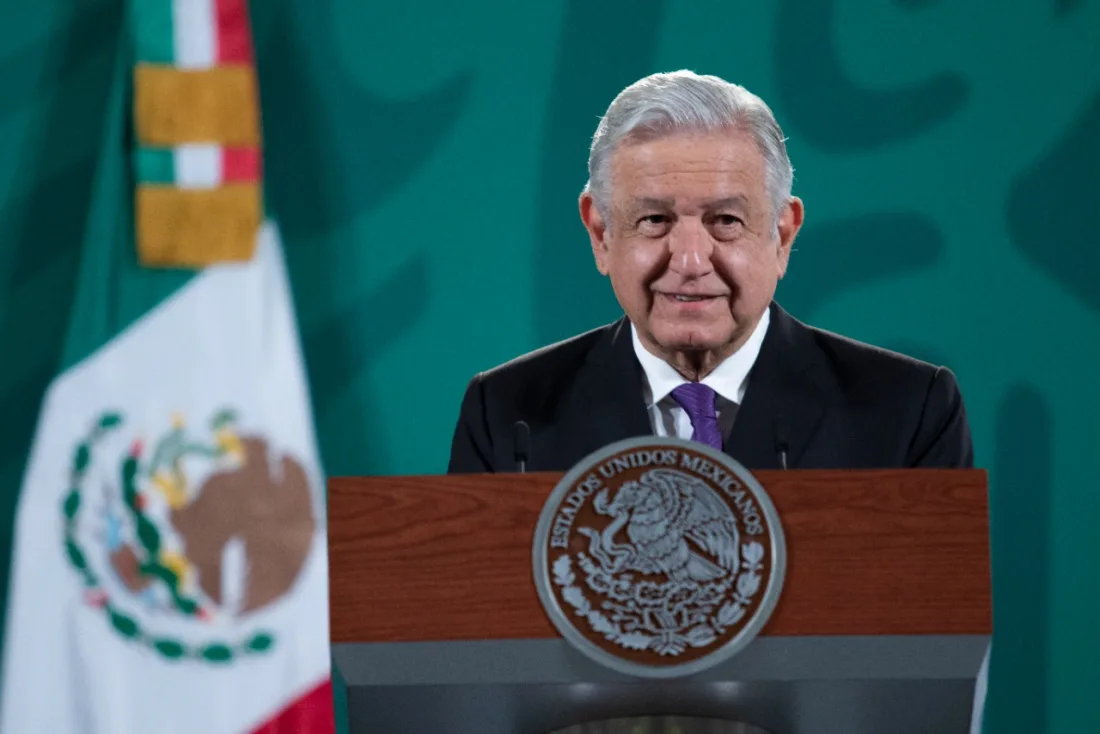 Photo: Presidencia de la República (public domain)
Why It Mattered
A president’s claim about the number of criminal organizations is not a neutral observation — it is a premise for policy. If the official count is three, the security strategy is calibrated to three actors. The CIDE data forced a factual confrontation into the most-read national daily: the empirical map of criminal presence does not match the political speech. Reforma’s decision to lead with this discrepancy gave the research its clearest moment of political relevance.
What the Article Reported
Reforma’s national-section lede draws a direct line between presidential rhetoric and empirical record. The day before publication, López Obrador had publicly asserted that governance was intact in Mexico and that no new criminal organizations had emerged during his administration. The article does not litigate that claim editorially — it simply lays the specialists’ counter-evidence beside it, allowing the contradiction to speak for itself on the front page of the country’s paper of record.
The piece then enumerates what those specialists actually documented. Beyond the three organizations the President named, there are at least 20 additional criminal organizations active in the country, including newly formed structures like Cárteles Unidos — a coalition that did not exist a few years earlier and whose emergence is precisely the kind of “new group” the President had denied. The article underscores that the larger, legacy cartels have not contracted but expanded during this same period, producing a landscape that is simultaneously more crowded and more dominated at the top — a configuration the official three-cartel frame cannot accommodate.
 Photo: U.S. Navy (public domain)
The reporting is anchored to the CIDE Drug Policy Program dataset, which places the total count of active criminal groups in Mexico at 23 — an order of magnitude beyond the presidential count. Reforma places this figure alongside the violence indicators from the same period: 40 massacres in the first half of 2021, ten of them in June alone. The juxtaposition is the article’s argument: the gap between the President’s count and the academic record is not a curiosity, it is the gap inside which most of the country’s recent violence has occurred. The decision to lead the national section with that discrepancy is what gave the underlying CIDE research its clearest moment of political relevance.
Citation
Baranda, A. (2021, July 2). Ve AMLO sólo 3 cárteles… pero existen 20 más. Reforma — Nacional.