La Fiscalía no habla de estos grupos criminales en las sombras: base de datos revela nombres
emeequis — Investigaciones · Oscar Balderas
La Fiscalía no habla de estos grupos criminales en las sombras
emeequis — Investigaciones · Reportaje de Oscar Balderas 2022 · Mexico Photo: source pending
The Investigation
Oscar Balderas, reporting for emeequis, uses the CIDE Drug Policy Program’s criminal-groups database to surface organizations the FGR omits from its official informes — El Cártel del Fantasma, Los Katas, Los Tegoripeños, and dozens more. The piece foregrounds the names the public has never heard, drawing on the database to argue that the gap between what the Fiscal Gertz Manero reports and what the academic record documents is itself a story about how the Mexican state chooses to narrate organized crime.
 Photo: Juan Carlos Fonseca Mata · Wikimedia (CC BY-SA 4.0)
What the Article Reported
Balderas opens with a scene rather than a statistic — a one-minute, 28-second video of two men, barely alive, suspended upside down from the tops of tall trees. The framing is deliberate: the violence the reporting will then quantify is not abstract, and the actors responsible for it are largely groups the Mexican state has never publicly named. From that image the piece moves into its core investigative argument: the Fiscalía General de la República (FGR) narrates Mexico’s organized-crime landscape using a vocabulary built around roughly a dozen recognized cartels, while the empirical record contains many times that number, the majority operating in regional shadow.
The reporting then uses the CIDE Drug Policy Program database as the counter-record. The single most striking case is the Cártel del Fantasma, which appears 32 separate times in the CIDE dataset across press communiqués, banners, and confirmed field reports — and zero times in any FGR press bulletin over the same window. The asymmetry is the story: there is no methodological dispute, no contested attribution; there is simply a group the academic record documents extensively and the federal prosecutor’s office does not acknowledge. Other names follow — Los Katas, Los Tegoripeños — each tied to documented violent activity, each absent from the official informes.
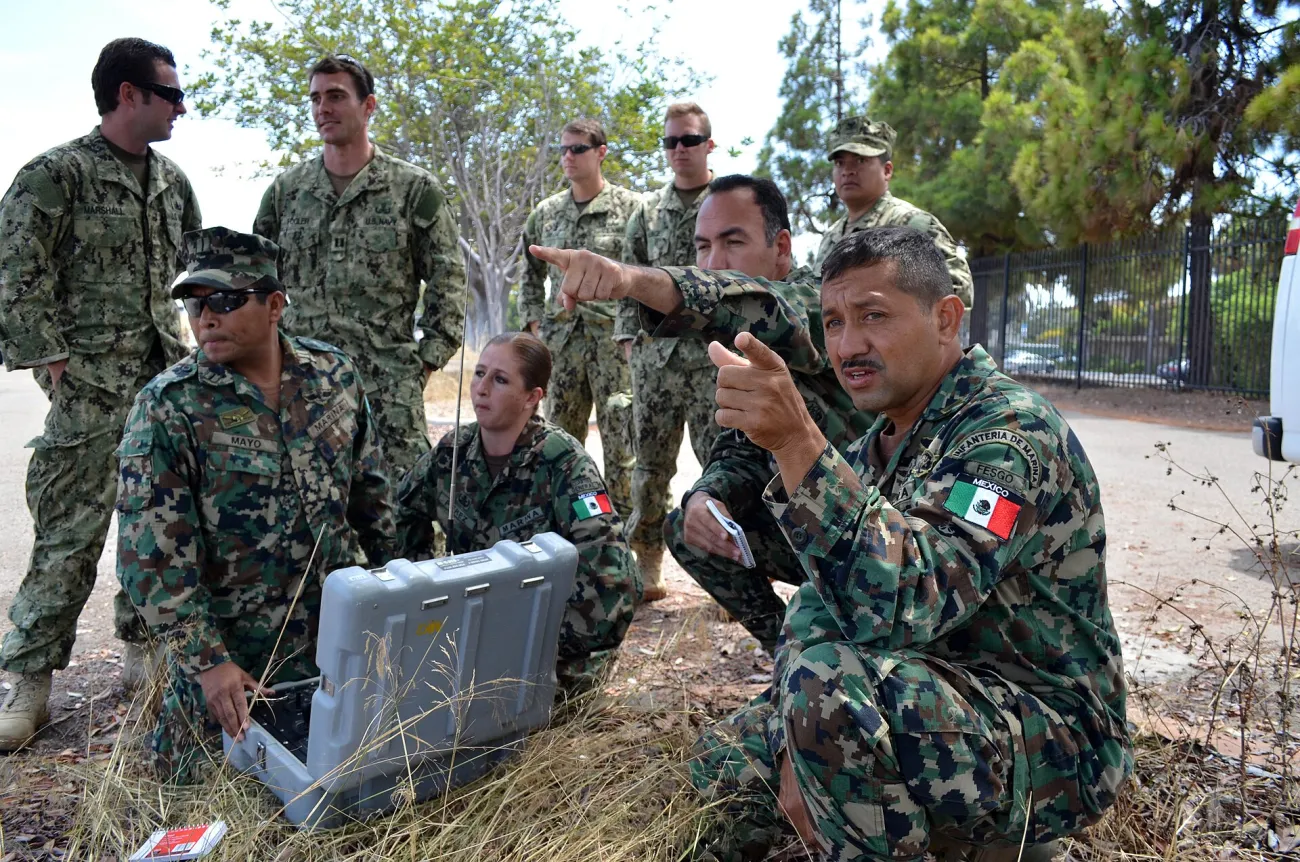 Photo: U.S. Navy (public domain)
Roa’s role in the piece is to underline what the discrepancy means structurally: “A pesar de que ‘oficialmente’ sea difícil conseguir la información con respecto a la presencia de dichas organizaciones, la inseguridad y los actores involucrados en este tema conforman un problema mayúsculo.” The official invisibility is not a paperwork problem — it is a framing problem with policy consequences. If the federal prosecutor’s office reports on twelve organizations while the academic record documents 148, then federal security policy is calibrated to twelve actors while the actual operational environment includes many times more. The reporting frames this gap as itself a story about how the Mexican state chooses to narrate organized crime — and whose violence, by omission, becomes invisible.
Citation
Balderas, O. (2022, January 27). La Fiscalía no habla de estos grupos criminales en las sombras: base de datos revela nombres. emeequis — Investigaciones. https://emeequis.com/investigaciones/la-fiscalia-no-habla-de-estos-grupos-criminales-en-las-sombras-base-de-datos-revela-nombres/