The best screening test is the one that gets followed up on
Gastroenterology
The Best Screening Test is the One That Gets Followed-up on
Caravaggio — The Incredulity of Saint Thomas (1601) Sanssouci Picture Gallery · Potsdam
The Problem
Colorectal cancer screening saves lives, but only when completed. Dr. Sidney Winawer’s saying, “the best test is the test that gets done and done well,” has driven campaigns to boost uptake. Yet nearly half of patients with a positive stool-based test never complete the follow-up colonoscopy, and without that step, screening delivers zero benefit while patients bear only the costs and harms.
The Approach
Using the MISCAN-Colon microsimulation model, we simulated 10 million people offered one-time FIT screening at age 45, varying screening and follow-up colonoscopy adherence across five levels (0–100%) to quantify each step’s contribution to life years gained, alongside a review of clinical evidence and system-level barriers.
What We Found
44% Lost to follow-up after a positive stool test
7× Higher CRC death risk without timely follow-up
0% Benefit with zero follow-up
Follow-up adherence is at least as important as screening adherence. 0% follow-up yielded zero life years gained even at 100% screening uptake; 25% screening with 75% follow-up matched 75% screening with 25% follow-up. In safety-net systems, where follow-up runs below 45%, even blood-based screening tests weren’t cost-effective versus no screening.
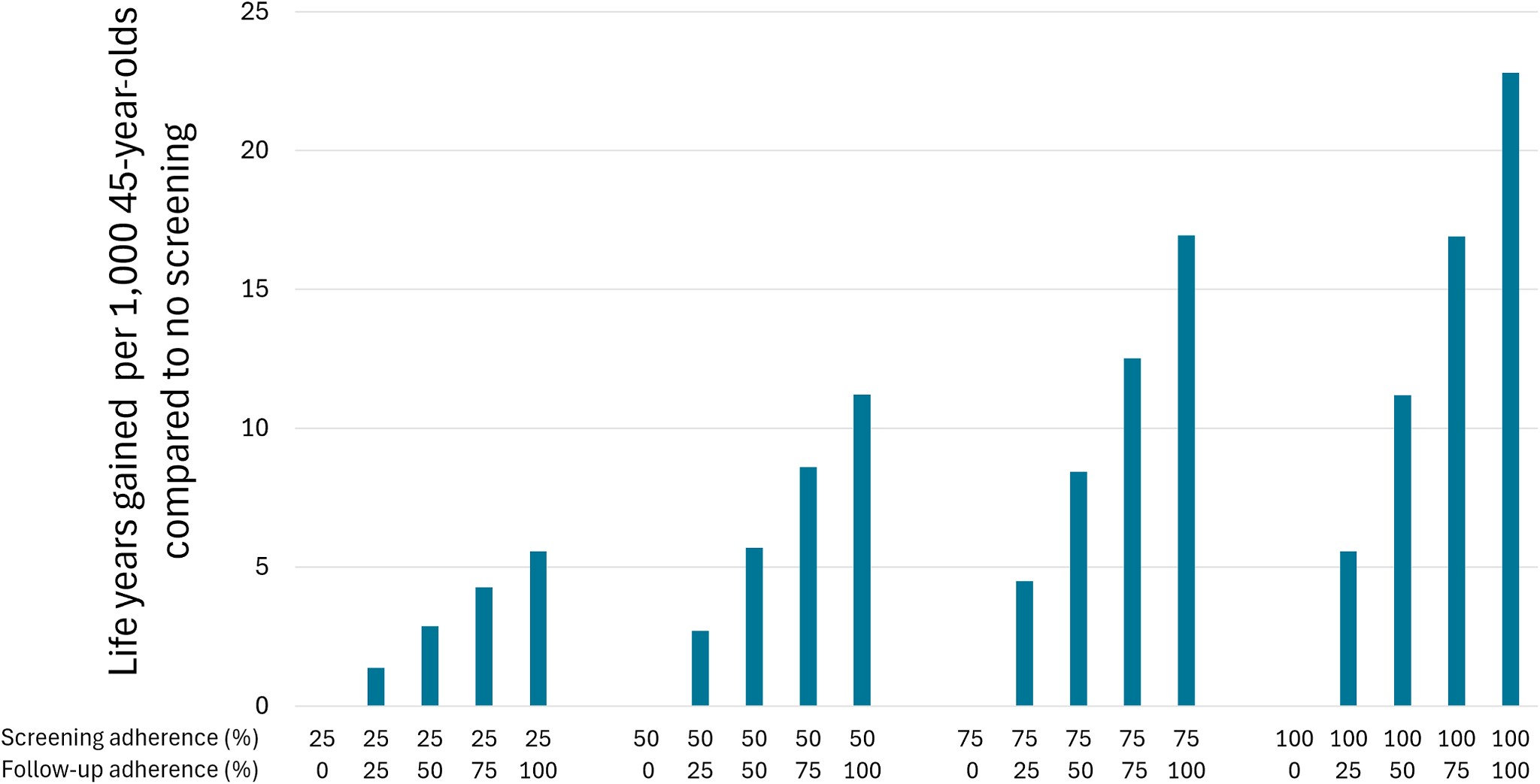 Life years gained per 1,000 screened at age 45 (FIT vs no screening), across screening and follow-up adherence levels.
Why It Matters
The CRC screening pipeline is leaking. Without timely follow-up colonoscopies, even perfect screening uptake and high-quality tests deliver no benefit. Patient navigation, reminder systems, care coordination, and rideshare programs can close that gap. As NCQA develops new HEDIS measures for follow-up adherence, the message must shift: screening is complete only when appropriate follow-up is provided.